Vanicream Dandruff Shampoo deserves a look if you want a medicated dandruff treatment without added fragrance. Its 2% pyrithione zinc formula is labeled to control symptoms of dandruff and seborrheic dermatitis, but that does not make it the right answer for every flaky scalp. The Drug Facts label is a better starting point than sensitive-skin marketing alone.
This guide is for U.S. adults weighing ingredient preferences, scalp symptoms and wash-day practicality. It is based on product documentation and dermatology guidance, not hands-on testing.
First, make sure dandruff is the likely problem
Dandruff and dry scalp can both cause itching and flakes. However, dry scalp involves moisture loss, sometimes linked to drying hair products or cold, low-humidity weather. The American Academy of Dermatology explains that dandruff may improve with medicated shampoo, while simple dryness may respond better to a gentle, non-medicated cleanser. Appearance alone may not settle the question. See the AAD’s explanation of dry scalp and similar conditions.
That distinction changes the buying decision. If your main concern is dryness after washing, do not assume a stronger dandruff treatment is the missing step. If flakes persist despite ordinary cleansing, a dandruff shampoo is a reasonable option to discuss or try according to its label. The AAD’s dandruff guidance includes zinc pyrithione among the available treatment ingredients.
What is in Vanicream Dandruff Shampoo?
The manufacturer’s current ingredient list identifies pyrithione zinc at 2%. Listed inactive ingredients include lauryl glucoside, coco-glucoside, glycerin and panthenol. Vanicream also describes the formula as sulfate-free and without botanical extracts or essential oils.
The package labeling states that it contains no fragrance, masking fragrance, dyes, lanolin, parabens or formaldehyde releasers. Those exclusions provide useful screening information if you already know which ingredients you need to avoid.
Vanicream markets the shampoo for sensitive skin and calls it dermatologist tested. Treat those as manufacturer claims, not a guarantee of tolerance. The product page does not provide enough testing detail to determine how every sensitive scalp will respond. Likewise, its “maximum strength” positioning should not be read as proof that it outperforms shampoos using other active ingredients. These distinctions matter more than a reassuring front label.
If you have a diagnosed ingredient allergy, compare your avoidance list with the complete formula rather than relying on a broad sensitive-skin description.
How to use it: follow this product’s directions
The Vanicream Drug Facts directions call for this routine:
- Shake the container before applying the shampoo.
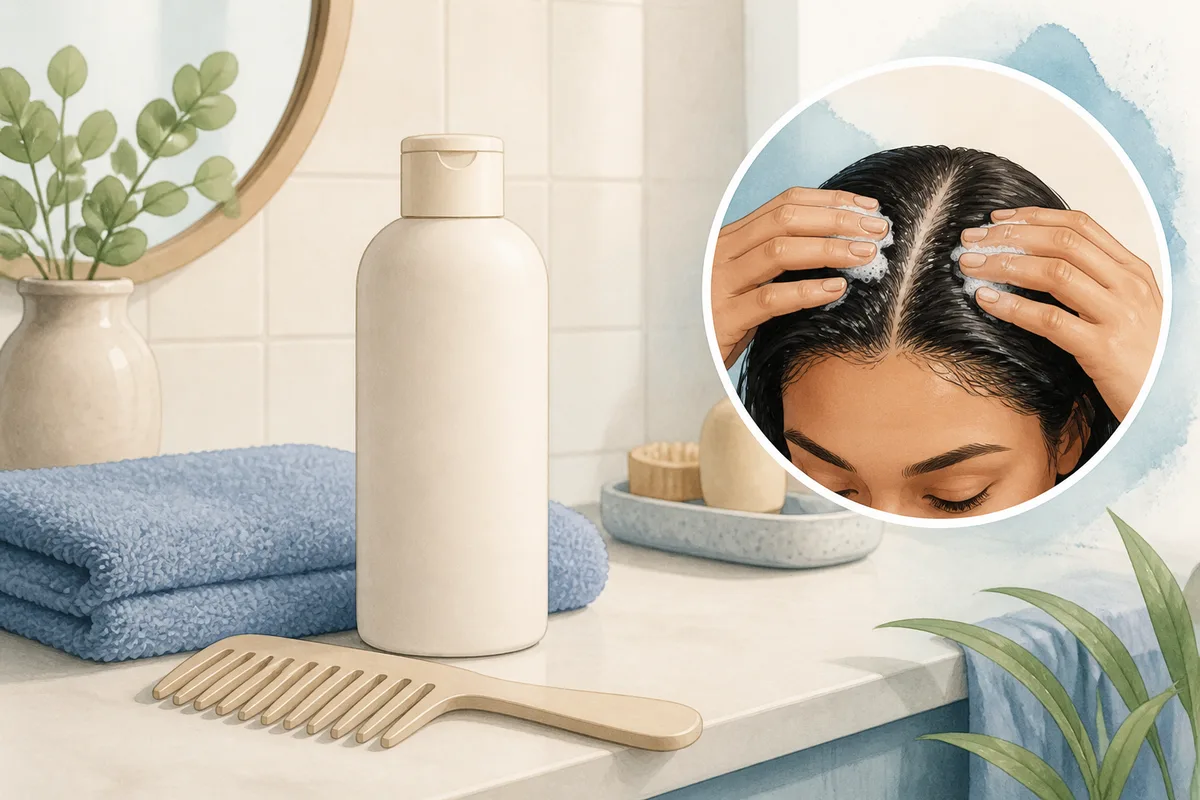
- Thoroughly wet your hair, then gently work the product into your scalp.
- Keep the lather on your scalp for several minutes.
- Rinse thoroughly; a second application is optional if needed.
- For best results, use it at least two times weekly unless your doctor gives different instructions.
Notice that the label says several minutes; it does not specify an exact five- or ten-minute interval. Do not borrow a contact time from another medicated shampoo.
The product is for external use. Avoid your eyes and rinse them thoroughly with water if contact occurs. Its label advises medical consultation before use when a condition affects a large body area, and stopping and consulting a doctor if symptoms worsen or fail to improve with regular directed use.
Fit the treatment to your hair type
Scalp treatment and hair-length care are not necessarily the same job. The AAD recommends tailoring dandruff care to hair texture:
- Fine, straight hair or an oily scalp: More frequent ordinary washing may be appropriate, with dandruff shampoo used about twice weekly.
- Coarse, curly or coily hair: General guidance suggests dandruff shampoo around once weekly if tolerated. Apply it to the scalp, because treatment ingredients can dry the hair.
- Conditioning needs: Regular shampoo and conditioner can follow the dandruff treatment when needed for hair care.
There is an important difference between that general once-weekly guidance and Vanicream’s twice-weekly label. If your hair-care needs make the labeled schedule difficult, ask a dermatologist to tailor the frequency rather than assuming either schedule fits everyone.
For planning wash days around real life, our guide to building a manageable wellness routine offers a useful organizational starting point—not a treatment protocol.
How it compares with other shampoo options
The most useful comparison is by treatment purpose, not brand popularity. Mayo Clinic’s independent treatment overview distinguishes ingredients that act against dandruff-associated fungus from those that help manage scaling and flaking.
| Option | Why consider it? | Main limitation or selection check |
|---|---|---|
| Pyrithione zinc, including Vanicream | One option for targeting fungus associated with dandruff | Compare the whole formula and directions, not just the percentage |
| Ketoconazole shampoo | A different antifungal active to consider if the first approach is unsuccessful | A different active does not guarantee a better individual result |
| Selenium sulfide shampoo | Another fungus-targeting alternative | Read that product’s own application instructions and ingredient list |
| Salicylic acid shampoo | An option focused on scaling and flaking | Its treatment role differs from choosing an antifungal ingredient |
| Coal tar shampoo | Can help with scaling and flaking | May discolor light hair and increase scalp sun sensitivity |
These are ingredient-level comparisons, not head-to-head rankings of finished products. If treatment stops working well, the AAD notes that a dermatologist may recommend rotating shampoos. More persistent inflammation may require prescription treatment rather than another over-the-counter purchase.
What to check before buying
Use this short checklist to avoid buying on branding alone:
- Exact product: Confirm that you are choosing the medicated dandruff shampoo, not a similarly named everyday cleanser.
- Full ingredient list: Check the bottle you receive against your personal restrictions.
- Routine fit: Allow time for scalp application, contact time and thorough rinsing.
- Actual cost: Compare the checkout price, bottle volume and shipping charges. Without knowing your application amount, a precise cost per wash would be guesswork.
- A review point: Keep a simple note of wash dates, flakes, itching and any discomfort instead of judging only the first wash.
Do not stockpile an unfamiliar formula before learning whether it suits your routine. This guide does not establish current retailer inventory or a lowest-price seller.
Who should consider alternatives or professional assessment?
Choose a gentler non-medicated approach if dryness, rather than dandruff, is the likely issue. Seek assessment for thick plaques, silvery scale, patchy hair loss or broken hairs: the AAD explains that psoriasis and scalp ringworm can resemble dandruff, but need different treatment.
Stop a shampoo that causes burning, stinging or new itching. If several weeks of treatment are not helping, Mayo Clinic recommends seeing a healthcare professional.
Mayo also notes that stress can worsen dandruff. If you want a separate relaxation habit, our mindful-living guide includes simple practices. Treat them as general self-care, not substitutes for scalp treatment.
Bottom line
Vanicream is worth considering when you specifically want a fragrance-free pyrithione-zinc shampoo and can accommodate its labeled routine. Its appeal is the combination of a medicated active and explicit ingredient exclusions—not demonstrated superiority. Choose based on the likely cause of your flakes, your ingredient history and how your scalp responds, with professional help when symptoms persist.
Sources
- https://dailymed.nlm.nih.gov/dailymed/fda/fdaDrugXsl.cfm?setid=d124a093-f739-0666-e053-2995a90a52ed
- https://www.aad.org/public/everyday-care/hair-scalp-care/scalp/treat-dandruff
- https://www.aad.org/public/everyday-care/hair-scalp-care/scalp/dry-scalp-conditions
- https://www.aad.org/public/diseases/a-z/seborrheic-dermatitis-treatment